
India will have 30 per cent of its two-wheeler industry turning electric by 2030 as new manufacturers lead the shift, said a report on Monday. Passenger vehicles will be 15 per cent electric and the three-wheeler segment 75 per cent electric by 2030, said the report by BNP Paribas called 'India Autos-Electric vehicles: Minutes to midnight'. "We see FY22 as the year of inflection for the two-wheeler EV industry, with an accelerated EV adoption helped by incentives, wider availability, model launches, rise in crude prices and improved general awareness. We see 30 per cent of the 2W industry turning electric by 2030; the pace of incentive withdrawal presents an upside/downside risk," the report (India Autos - Electric vehicles: Minutes to midnight) said.

The two-wheeler giant had only 14 per cent of the electric two-wheeler market in May this year, but its 26.8 per cent in December

Korean automaker Hyundai Motor Group (HMG) is vigorously aiming to establish a robust presence in India's electric vehicle (EV) segment through the introduction of new models and the establishment of charging stations under Hyundai Motor India (HMIL) and Kia India. Euisun Chung, executive chairman of HMG, who is currently visiting India, urged both companies to deliver products that not only meet but exceed customer expectations on time, thus driving the achievement of these growth targets. The group is strategically working to elevate Kia's market share from the current 6.7 per cent to an impressive 10 per cent in India in the near future.

There is no impediment to normal operations as Tata Motors puts in place the demerger process of its commercial and passenger vehicles businesses. Instead, the demerger would provide greater manoeuvrability for both new entities to operate independently, according to Tata Motors management. While there may not be immediate value unlocking, it will give investors clarity about future growth and the financials across different segments.

Overall market reaction to the Budget was neutral. Investors absorbed the changes to the tax rates (positive for salaried class) and capital gains taxes (CGTs, negative due to the removal of indexation and increases. Other proposals largely pertain to supporting rural development, buybacks taxed as dividends, Custom duty changes that impact multiple sectors, higher outlays for clean energy, etc. There's some moderation in the growth of capex outlay across defence, fer
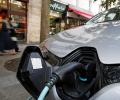
Automobile manufacturers, new and old, as well as ancillary suppliers are set to spend a combined Rs 70,630 crore over the next five years on either entering the electric vehicle segment or stepping up their presence in it. Data culled from announcements made by firms shows India, the world's fifth largest automobile market, is poised to receive one of the biggest capex pushes ever to fuel the transition from internal combustion engines to electric motors and batteries as part of a green drive. The EV push, egged on by the government's emphasis on electric mobility to meet its net zero targets, is expected to yield at least 25 electric vehicles - new ones as well as electrified versions of existing vehicles running on internal combustion engines.

'If you align your ambition with India's rise, the peak of your careers will unfold alongside the peak of India's power.'
The $306-million investment in Ola Electric Mobility by SoftBank Corp, Arun Sarin Family, Ratan Tata and Matrix has been the biggest funding in this space in value terms this year.

Bengaluru outpaced Mumbai, Delhi, and Pune in 2023 to become India's leading city for electric car registrations. The city's tech-savvy workforce, increased acceptability, zero road tax, subsidised electricity for EV charging, and a wide charging station network contributed to this surge. Electric car registrations in Karnataka's capital surged more than threefold in 2023 to 8,690 units, overtaking the growth witnessed in the other three cities, according to data from Jato Dynamics
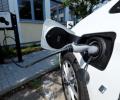
Electric vehicle market is likely to attract investments of Rs 94,000 crore over the next five years and is expected to generate business opportunities in the real estate sector, according to a joint report by Colliers India and Indospace. The report 'Electric Mobility in Full Gear' mentioned that the electric vehicle (EV) industry in India is currently at a nascent stage but it is likely to grow, backed by government initiatives and a move towards recognising climate change. "India is taking a step towards sustainability and has vowed to cut its carbon emissions. "At the recently concluded CoP26 summit, India pledged to reach net-zero carbon emissions by 2070. "In India, the transport sector is currently the third-largest emitter of CO2. This is leading to increased thrust on EVs in India," it said.
'Our strategy is intact and our important pillars for India -- the SUV roll-out and the focus on the cost of ownership of a car -- remain in focus'

Nearly one in two luxury cars sold in India in the first three months of 2024 was a Mercedes Benz, which achieved its best ever quarter (January-March), selling 5,412 units, up 15 per cent year-on-year (Y-o-Y) from 4,697 units in the previous year.
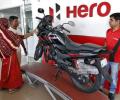
Hero MotoCorp anticipates a big rebound in two-wheeler (2W) sales in rural India over the next four to eight quarters, driven by favourable factors such as a decent monsoon, rising crop prices, improved employment conditions, and increasing consumer confidence, its chief executive officer (CEO) Niranjan Gupta said on Wednesday. Amid tepid rural sales, he stated that there is a "strong case" for GST (goods and services tax) on entry-level two-wheelers, which are under 125 CC, to be moved down from 28 per cent to 18 per cent as they are used by "masses".

Maruti Suzuki's contribution to the sales revenue of its Japanese parent, Suzuki Motor Corporation (SMC), has touched the highest-ever figure during April-December of FY23. According to SMC's results declared on Tuesday, Maruti's share in its global revenues jumped from 33.42 per cent in April-December of FY22 to 40.93 per cent in the corresponding period of FY23.
The question is: Will the company have a strong balance sheet to support this massive investment plan?

Two Japanese auto giants, Honda and Nissan, are moving towards a potential merger, but it remains unclear how their Indian operations will be immediately impacted.

TVS Motor Company has been one of the best-performing two-wheeler stocks in the current financial year (FY24), enriching investors with gains of 24 per cent. Among listed two-wheeler stocks, only Hero MotoCorp has done better in this period. New launches, market share gains, steady margins and expectations that its performance will continue in FY24 are expected to support TVS Motor's stock.

Maruti Suzuki says it has sold at least one car in 418,000 villages.

The stock of the country's largest passenger vehicle maker, Maruti Suzuki India (MSIL), has been hitting successive all-time highs over the past three trading sessions. The rally in the scrip has helped it notch over a 21 per cent gain since the start of February, outperforming the National Stock Exchange Nifty Auto Index. The gains for the leader of small passenger cars have been more recent, as the company still trails the Nifty Auto over one- and two-year periods.

'SUV is a very intensely fought category, unlike hatchbacks and cars.'
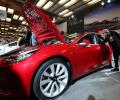
While Elon Musk's political influence continues to grow, his business empire is witnessing headwinds.

India's three-wheeler exports, which have been on a downhill trajectory over the past few years, are showing no signs of recovery in FY25, with key markets like Sri Lanka, Bangladesh, Nigeria, and Egypt witnessing subdued demand. In May, the country's exports plummeted 11.3 per cent year-on-year (Y-o-Y).
Tata Motors is likely to exit the S&P BSE Sensex and the Nifty50 indices once the demerger process of its commercial vehicle (CV) and passenger vehicle (PV) businesses is complete, analysts at Nuvama Institutional Equities said. They have compared the development with Reliance Industries (RIL) and Jio Financial Services, which got listed separately and eventually (in the next few days) got excluded from the domestic indices.

Tata Motors plans to have 10 new battery electric vehicles (BEVs) in its domestic product portfolio by 2025 as it looks to drive its business model towards sustainable mobility going ahead, as per Tata Motors chairman N Chandrasekaran. In his message to the shareholders, he noted that the auto major aims to be amongst the world leaders in sustainable mobility solutions and as part of that it is also exploring tie-ups in cell and battery manufacturing to secure supplies for its portfolio of green vehicles. "In India, EV penetration in our portfolio has now doubled to 2 per cent this year and we expect penetration to increase exponentially in the coming years. "Tata Motors will lead this change in the Indian market. By 2025, Tata Motors will have 10 new BEV vehicles and as a Group, we will invest proactively to set up charging infrastructure across the country," Chandrasekaran informed shareholders in the company's Annual Report for 2020-21.

For the first time in history, the luxury car market is poised to cross the sales mark of 50,000 units in 2024, with Mercedes leading the way

India's largest life insurer, Life Insurance Corporation of India (LIC) reported encouraging performance in the January-March quarter (Q4) of FY24. Total annual premium equivalent (APE) was at Rs 21,180 crore, up 10.7 per cent year-on-year (Y-o-Y), with group APE of Rs 3,890 crore, up 60 per cent Y-o-Y, though individual APE contracted 2.1 per cent Y-o-Y. The participatory book contracted 20.2 per cent Y-o-Y, but the non-par grew by 206 per cent to Rs 3,740 crore.

Passenger vehicle dispatches in India from factories to dealers rose to record levels at over 43 lakh units in FY25, with utility vehicles accounting for 65 per cent of the total sales in the segment, industry body SIAM said on Tuesday. Passenger vehicle (PV) dispatches rose to 43,01,848 units in the last fiscal year, marking a 2 per cent increase compared to 42,18,750 units in FY 2023-24.

With sentiment for the automotive (auto) sector turning positive, stocks of two-wheeler auto majors have been hitting their 52-week highs. Hero MotoCorp, Bajaj Auto, TVS Motor Company, and Eicher Motors recently reached their yearly highs on strong sales in the festival season and the expectation of faster growth rates ahead. Since the start of this month, listed two-wheeler majors have delivered returns in the 12-17 per cent range, compared to the 7 per cent gains for the S&P BSE Auto Index and 3 per cent for the benchmark S&P BSE Sensex.
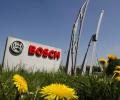
The stock of auto component major Bosch was up 2.5 per cent on Wednesday and in the process hit its 52-week high. Expectations of higher volumes of medium and heavy commercial vehicles' (M&HCV), rise in content supplies on account of BS VI stage 2 implementation from April, and improved profitability are some of the positives for the stock. In addition to this, the company appointed a new managing director and joint managing director last week, which will come into effect from July 1.

'We are seeing one of the highest discounts in recent years across companies.' 'October is a crucial month with several festivals coming up.'

Chinese electric carmaker BYD is focusing on launching vehicles in the Rs 25-45 lakh price range in India even as it continues to evaluate customer preferences and demand in more affordable segments, its Head of Electric Passenger Vehicles in India Rajeev Chauhan told Business Standard.

From the Sensex pack, Adani Ports & Special Economic Zones, Mahindra & Mahindra, Reliance Industries, HDFC Bank, Larsen & Toubro, NTPC, State Bank of India, UltraTech Cement and Kotak Mahindra Bank were the major gainers. In contrast, Tata Steel, Titan, Bajaj Finserv, JSW Steel, Bajaj Finance, Hindustan Unilever, ITC, Tata Motors and Tata Consultancy Services were among the laggards.

The board of Maruti Suzuki India (MSIL) on Tuesday approved a proposal to issue shares worth Rs 12,841 crore to parent company Suzuki Motor Corporation (SMC) for acquiring Suzuki Motor Gujarat (SMG). The Gujarat manufacturing plant - with an annual capacity of 750,000 units - is owned by SMG, a wholly-owned subsidiary of SMC. The shares issued to SMC will raise its ownership in MSIL from 56.48 per cent to 58.19 per cent--India's largest carmaker stated in a notice to BSE.

Anmol Singh Jaggi and Puneet Singh Jaggi, once hailed as rising stars in India's clean energy sector, are now facing serious regulatory action.

The MG ZS EV, to be unveiled next month, will go head to head with Hyundai Kona, launched in July this year as the country's first fully electric SUV.

Car sales are experiencing a challenging phase with around Rs 60,000 crore worth of inventory lying unsold with dealers.

According to Siam data, Indian auto companies sold 982,456 units of utility vehicles in the first half of FY23, a 50.29 per cent growth over the corresponding period last year.

Given that there has been no negative news flow around Zomato, analysts believe it's time to lap up the shares at lower levels.
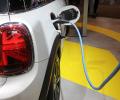
Electric vehicle retail sales in the country witnessed over three-fold jump last fiscal with two-wheeler offtake leading the segment, according to data compiled by automobile dealers' body FADA. Total electric vehicle (EV) retails reached 4,29,217 units in 2021-22, a rise of three-fold from 1,34,821 units in the financial year 2020-21, the industry body said. Total EV sales had stood at 1,68,300 units in the 2019-20 fiscal, it noted.

Steel maker JSW Steel's Q3 results, announced on January 24, 2025, after market hours, failed to meet Street expectations. The company reported a consolidated net profit attributable to the owners of Rs 717 crore in Q3FY25, reflecting a 70.3 per cent decline Y-o-Y, compared to Rs 2,415 crore in Q3FY24.
